


Medical cleaning equipment types are specialized tools designed to meet stringent infection control standards in healthcare facilities, keeping patients and staff safe from preventable infections. Selecting the right hospital cleaning equipment requires more than a general “medical-grade” label. Procurement specialists must match each tool to a specific surface risk category, guided by frameworks like the Spaulding Classification System. The categories covered here range from HEPA-filter vacuums and microfiber mop systems to automated endoscope reprocessors and UV-C disinfection devices. Each category serves a distinct role, and choosing incorrectly creates real infection risks.
1. What are the main medical cleaning equipment types?
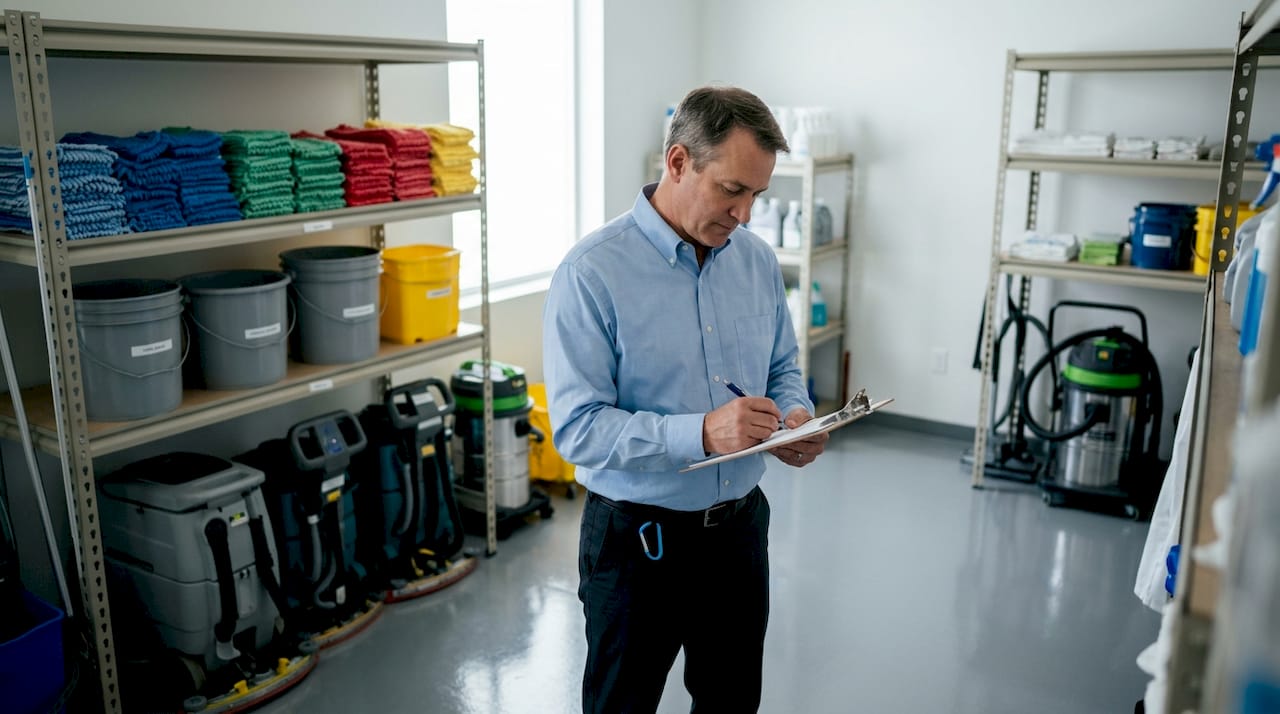
Healthcare facilities rely on six core categories of cleaning and sanitation equipment. Each category targets a specific contamination pathway, from airborne particles to high-touch instrument surfaces.
- HEPA-filter vacuum cleaners: Capture fine particles and pathogens from floors, upholstery, and air handling areas without exhausting contaminants back into the room.
- Hospital-grade microfiber mop systems: Use flat, color-coded pads to clean and disinfect floors in designated zones, preventing cross-contamination between clinical areas.
- Floor scrubber-dryers: Mechanically scrub and dry large floor areas in a single pass, reducing manual labor and dwell time for disinfectants.
- UV-C disinfection devices: Emit ultraviolet light to inactivate surface pathogens as a supplementary step after manual cleaning.
- Specialized surgical brushes and instrument washers: Remove bioburden from complex medical devices before sterilization.
- Automated endoscope reprocessors (AERs): Run validated, repeatable cleaning and disinfection cycles for flexible endoscopes, reducing human error.
Pro Tip: Build your equipment inventory around surface risk categories first. Map every clinical zone to a Spaulding Classification level, then assign equipment accordingly before reviewing any product specifications.
2. How HEPA-filter vacuums protect healthcare air quality
HEPA-filter vacuum cleaners are the standard for airborne particle control in clinical environments. A compliant HEPA filter captures 99.97% of particles at 0.3 microns, the size at which filtration is hardest to achieve. That performance level prevents pathogens from being exhausted back into patient areas during routine vacuuming.
Standard commercial vacuums do not meet this threshold. They recirculate fine dust and microbial particles, which is unacceptable in operating rooms, isolation wards, or immunocompromised patient areas. HEPA-compliant units seal the entire airflow path, not just the filter cartridge, so no bypass leakage occurs. Facilities should verify whole-unit certification, not just filter-level claims, when procuring these machines.
Pro Tip: Replace HEPA filter cartridges on a schedule tied to hours of use, not calendar months. High-traffic clinical areas exhaust filter capacity faster than a fixed monthly schedule accounts for.
3. Hospital-grade microfiber mop systems and cross-contamination control
Color-coded, flat microfiber mop systems are the current standard for floor disinfection in hospitals and clinics. Color-coded microfiber pads assign specific colors to specific zones, such as red for restrooms, blue for general wards, and green for food preparation areas. This zoning prevents staff from carrying pathogens from high-risk areas into lower-risk spaces.
Pre-impregnated, bucketless pad systems add another layer of control. Each pad arrives with a measured dose of disinfectant already applied, eliminating the inconsistency of staff manually diluting chemicals into a shared bucket. Shared mop buckets are a well-documented cross-contamination vector, and pre-impregnated systems remove that risk entirely. Microfiber material also outperforms traditional cotton mops at physically removing pathogens from surfaces rather than just spreading them.
| Feature | Traditional mop system | Color-coded microfiber system |
|---|---|---|
| Cross-contamination risk | High (shared bucket) | Low (zone-specific pads) |
| Chemical consistency | Variable (manual dilution) | Controlled (pre-impregnated) |
| Pathogen removal | Moderate (spreading risk) | High (microfiber capture) |
| Staff training requirement | Low | Moderate (color protocol) |
Pro Tip: Post color-coding charts at every mop storage station. Visual reminders at the point of use reduce protocol errors more reliably than periodic training sessions alone.
4. Floor scrubber-dryers: efficiency and patient comfort
Hospital scrubber-dryers clean and dry large floor areas in a single pass, which matters in active clinical environments where wet floors create fall hazards. Top-performing models cover up to 1,200 square meters per tank, making them practical for large ward corridors and outpatient lobbies. Whisper-quiet motor designs allow use in occupied patient areas without disrupting rest or care.
These machines evaluate well on three criteria: pathogen elimination rate, surface material compatibility, and noise output. Procurement specialists should request decibel ratings alongside cleaning performance data. A machine that cleans effectively but generates 75 decibels is unsuitable for use near patient rooms. Surface compatibility also matters because some scrubber-dryer solutions degrade certain floor coatings over time, creating micro-cracks that harbor bacteria.
Maintaining cleaning equipment with features like tiltable tanks and stainless steel internal surfaces prevents the machine itself from becoming a contamination source. A scrubber-dryer with hard-to-clean internal components will accumulate biofilm and redeposit pathogens on floors during subsequent use.
5. UV-C disinfection devices: role and real limits
UV-C light devices inactivate surface pathogens by damaging their DNA, making them a useful supplementary tool in terminal cleaning protocols. The critical limitation is that UV-C cannot penetrate organic debris, blood, or soil. Any surface that has not been manually cleaned first will have shadowed areas where pathogens survive UV exposure completely unaffected.
UV-C devices work best as a final step after thorough manual cleaning and chemical disinfection, not as a replacement for either. Facilities that deploy UV-C as a standalone solution create a false sense of security. The technology adds genuine value in high-risk rooms such as isolation units and operating theaters when used correctly in sequence. Staff positioning and room geometry also affect coverage, so validated placement protocols are required for consistent results.
6. Automated endoscope reprocessors
Automated endoscope reprocessors (AERs) are the recommended standard for cleaning flexible endoscopes, which are among the highest-risk devices in any clinical setting. Automated reprocessors deliver validated, repeatable cleaning cycles that manual soaking cannot reliably replicate. Repeatability is the key advantage: every cycle runs at the same temperature, chemical concentration, and duration, removing the variability that human operators introduce.
Manual endoscope soaking depends on staff compliance with timing, chemical dilution, and mechanical brushing technique. Any deviation creates a gap in decontamination. AERs document each cycle electronically, which supports regulatory audits and infection control investigations. For facilities processing high volumes of endoscopes, AERs also reduce staff exposure to high-level disinfectants like glutaraldehyde.
7. Specialized surgical brushes and instrument washers
Surgical brushes are the first line of defense against bioburden on complex medical instruments before sterilization. Single-use brushes reduce the risk associated with reprocessing brushes themselves, which can harbor residual contamination in bristle bases. High-complexity instruments with lumens, joints, or textured surfaces require brushes sized and shaped to match the device geometry specified by the manufacturer.
Instrument washers automate the pre-sterilization cleaning step for surgical sets, running thermal or chemical cycles that standardize bioburden removal. Facilities that rely solely on manual brushing for large surgical instrument volumes face consistency problems at scale. Combining single-use brushes for initial gross decontamination with automated washer cycles for the full set produces the most reliable results.
8. Chemical compatibility and surface material matching
Matching disinfectants to equipment surface materials is a procurement requirement, not an afterthought. Incompatible disinfectants degrade polymer, rubber, silicone, and glass surfaces over time, forming micro-cracks that trap pathogens and resist subsequent cleaning. A surface that looks clean can harbor a significant microbial load inside invisible surface damage.
Procurement specialists should request material compatibility data from both the equipment manufacturer and the disinfectant supplier before finalizing purchasing decisions. Facilities that standardize on a single disinfectant for all surfaces often cause accelerated wear on equipment not rated for that chemistry. The Spaulding Classification System guides which disinfection level each surface requires, from low-level disinfection for non-critical items to sterilization for critical devices. Applying the correct disinfection level also prevents over-treating surfaces with harsh chemistries that cause unnecessary material degradation.
Pro Tip: Create a compatibility matrix that lists every surface material in your facility alongside approved disinfectants. Share it with both clinical and housekeeping staff to prevent accidental damage from off-protocol product substitutions.
Key takeaways
Effective medical facility cleaning depends on matching each equipment type to a specific surface risk level, not on purchasing the most expensive or broadly labeled “medical-grade” product.
| Point | Details |
|---|---|
| HEPA filter standard | Compliant vacuums must capture 99.97% of particles at 0.3 microns to protect clinical air quality. |
| Color-coded mop zoning | Assign specific pad colors to clinical zones to prevent cross-contamination between high-risk and low-risk areas. |
| UV-C as supplement only | UV-C devices require prior manual cleaning to work; they cannot penetrate organic debris on their own. |
| Chemical compatibility | Match disinfectants to surface materials using manufacturer data to prevent micro-crack formation and pathogen harboring. |
| Automate high-risk devices | Use automated endoscope reprocessors and instrument washers to deliver validated, repeatable decontamination cycles. |
What I’ve learned from years of medical facility cleaning
The most common procurement mistake I see is buying equipment based on price or a vague “medical-grade” claim, then discovering it does not fit the actual clinical environment. A HEPA vacuum rated for a general office building is not the same as one certified for an isolation ward. The label sounds similar. The performance gap is significant.
The second mistake is treating UV-C devices as a complete solution. Facilities invest in UV-C robots and then reduce manual cleaning frequency, which is exactly backwards. UV-C adds value only when the manual cleaning underneath it is already thorough and consistent. The technology amplifies good practice. It does not compensate for poor practice.
What actually works is building your equipment selection around the Spaulding Classification framework from the start. Classify every surface and device in your facility, assign the required disinfection level, then identify equipment that meets that level reliably and repeatedly. Automate wherever human error creates compliance risk, particularly for endoscopes and complex surgical instruments. Maintain your equipment as rigorously as you maintain your clinical devices, because a contaminated scrubber-dryer or a degraded mop pad is a contamination source, not a cleaning tool.
The facilities that manage infection control well are not always the ones with the largest equipment budgets. They are the ones with clear protocols, trained staff, and equipment matched precisely to clinical need.
— William
Lightningcleaning’s medical facility cleaning services
Healthcare facility managers need more than the right equipment. They need a reliable service team that understands infection control requirements and applies them consistently across every visit.
Lightningcleaning specializes in medical facility cleaning across the Durham Region, working with clinics, medical offices, and healthcare spaces that require protocol-driven sanitation. Our staff trains on current infection control standards, and we use equipment and products matched to the specific surface risk levels in each clinical area. We also support facilities with floor care through our floor care services, keeping high-traffic clinical corridors clean and safe. Contact Lightningcleaning for an accurate quote tailored to your facility’s needs.
FAQ
What is medical cleaning equipment?
Medical cleaning equipment refers to tools specifically designed to meet healthcare infection control standards, including HEPA vacuums, microfiber mop systems, scrubber-dryers, UV-C devices, and automated reprocessors. Each type targets a specific contamination pathway in clinical environments.
What does the Spaulding Classification System determine?
The Spaulding Classification System categorizes medical surfaces and devices by infection risk, from non-critical items requiring low-level disinfection to critical devices requiring full sterilization. Procurement specialists use it to match the correct cleaning intensity and equipment to each surface type.
Are UV-C disinfection devices effective on their own?
UV-C devices are not effective as standalone tools because they cannot penetrate organic debris or soil. They must follow thorough manual cleaning to inactivate surface pathogens reliably.
Why are automated endoscope reprocessors preferred over manual soaking?
Automated endoscope reprocessors deliver validated, repeatable cycles that eliminate the variability of manual technique, reducing human error and supporting regulatory compliance documentation.
How do color-coded mop systems reduce infection risk?
Color-coded microfiber mop systems assign specific pad colors to designated clinical zones, preventing staff from transferring pathogens between high-risk and low-risk areas during routine floor cleaning.


