


Cleaning is the primary defense against illness in schools. The role of cleaning in student health goes far beyond appearances: consistent, documented hygiene protocols directly reduce respiratory infections, cut absenteeism, and create conditions where students can focus and learn. Research links poor environmental conditions in classrooms to a 4.12-fold increase in Acute Respiratory Tract Infection risk among elementary students. That number means one thing clearly: cleaning is not a maintenance task. It is a health intervention.
How does poor school cleaning affect student illness?
Poor sanitation in schools drives measurable spikes in student illness. A study of elementary classrooms found that ARI prevalence reached 36.3%, with 40% of classrooms showing inadequate environmental conditions. Students in those rooms got sick at dramatically higher rates than peers in cleaner spaces.
The connection between dirty classrooms and missed school days is direct. Illness keeps students home, and repeated absences compound into real academic setbacks. A student who misses two weeks per semester due to respiratory infections loses ground in reading, math, and social development that is hard to recover.
The highest-risk areas in any school building include:
- Restrooms: Biofilm buildup, soap shortages, and cross-contamination make these the most common source of bacterial spread.
- Dining areas: Food residue and shared surfaces create ideal conditions for pathogen transfer.
- Classrooms: Shared desks, keyboards, and door handles accumulate germs between cleaning cycles.
- Water fountains: Rarely deep-cleaned, these are a silent vector for gastrointestinal illness.
Pro Tip: Ask your school’s facilities manager for the cleaning log. A school that cannot produce a documented daily routine is a school that likely fails on consistency, which is the single biggest predictor of infection control success.
What cleaning protocols actually reduce school infections?
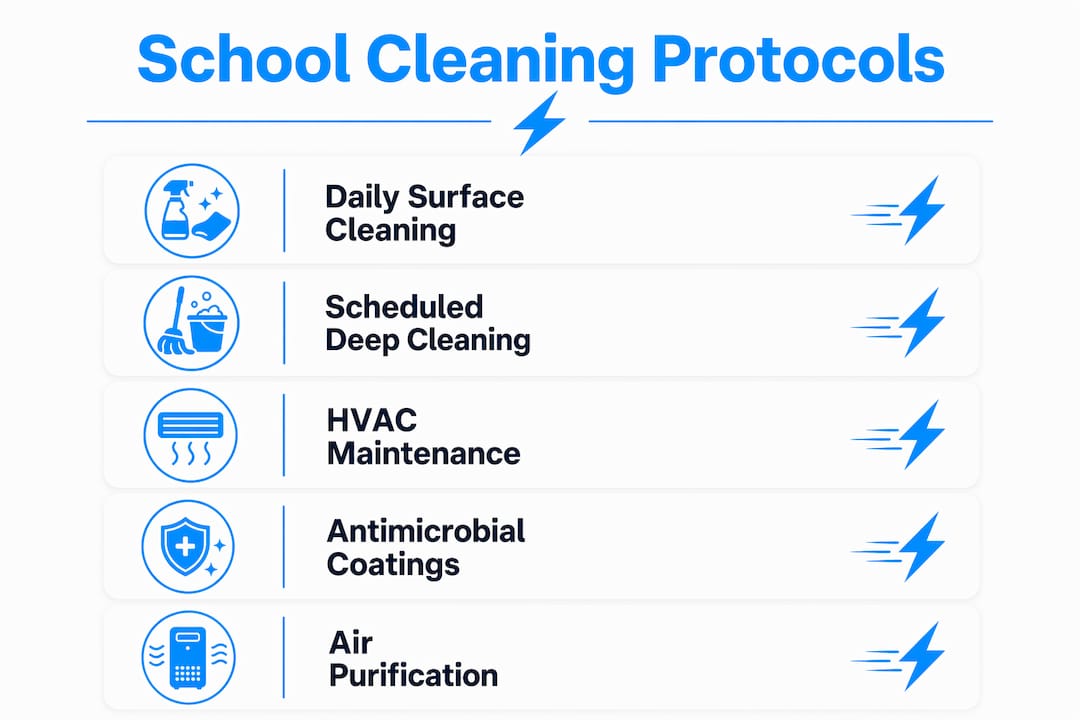
Integrated hygiene approaches, not single-step cleaning, produce the strongest results. A kindergarten study using daily microfiber cloth cleaning combined with weekly and monthly deep cleaning cycles reduced absenteeism from 4.4% to 3.0%. That drop represents hundreds of additional school days attended across a single academic year.
The protocol that produced those results followed a layered structure:
- Daily weekday cleaning: Microfiber cloths on all contact surfaces, including desks, chairs, and door handles.
- Weekly deep cleaning: Floors, window ledges, and shared equipment sanitized with mild, fragrance-free agents.
- Monthly targeted cleaning: Air vents, ceiling fixtures, and storage areas addressed to prevent dust and mold accumulation.
- Outbreak response cleaning: Triggered by confirmed illness cases, targeting restrooms and high-touch zones with approved disinfectants.
Multi-layered hygiene interventions also incorporate antimicrobial coatings and air purification systems alongside surface cleaning. These additions complement daily routines rather than replace them. The key principle is that no single method covers all transmission routes. Surface cleaning stops contact spread. Air purification addresses airborne particles. Water system maintenance prevents gastrointestinal illness. All three must work together.
The practical takeaway for educators and parents is this: ask whether your school uses a written, scheduled protocol or reacts only when something looks dirty. Reactive deep cleaning is consistently less effective than documented daily routines at both preventing infection and passing health inspections.
How does HVAC cleaning affect student respiratory health?
Air quality is a cleaning problem, not just a ventilation problem. Certified HVAC cleaning significantly reduces incapable particulate matter in occupied school buildings across both heating and cooling seasons. Particulate matter at elevated concentrations triggers asthma attacks, worsens allergies, and impairs concentration in students who are otherwise healthy.
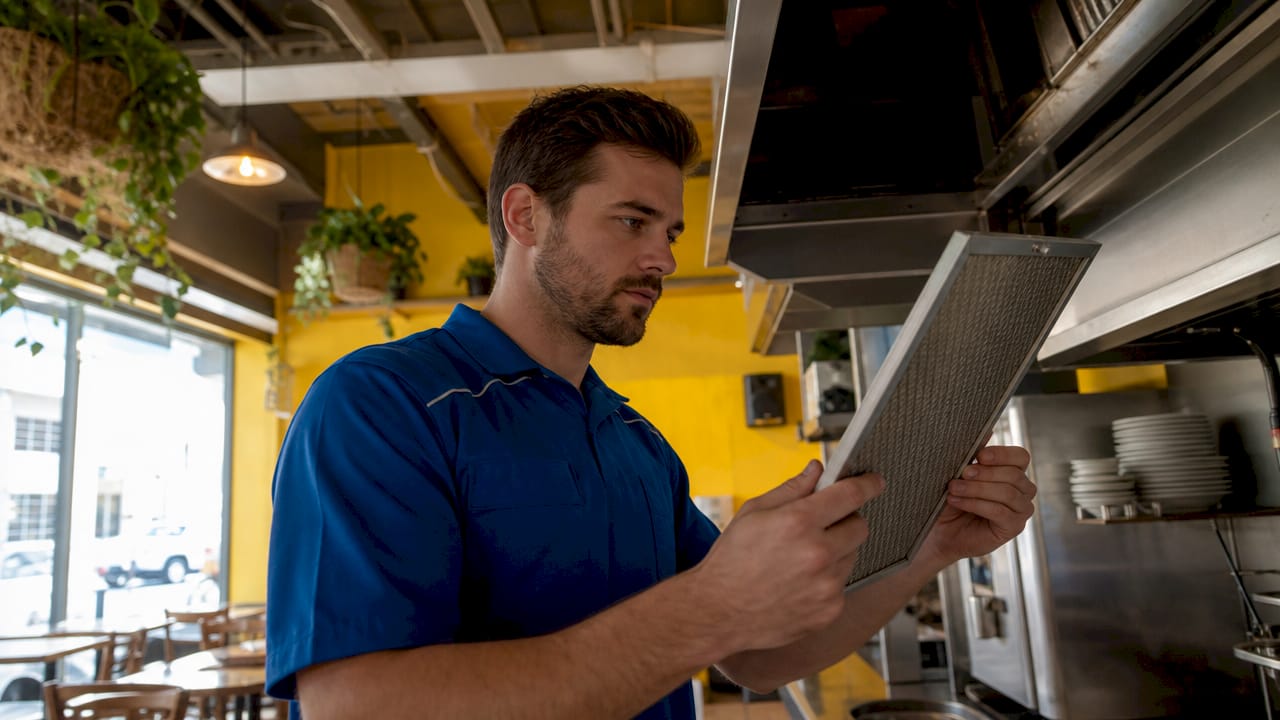
ASHRAE and the CDC both set ventilation standards for educational facilities, specifying minimum air exchange rates per classroom. When HVAC ducts go uncleaned, those exchange rates become meaningless. Dirty ducts recirculate dust, mold spores, and allergens regardless of how often the mechanical system runs.
| Air quality factor | Health impact | Cleaning solution |
|---|---|---|
| Particulate matter | Asthma, reduced concentration | Certified HVAC duct cleaning |
| Mold spores | Respiratory infections, allergies | Monthly vent and ceiling cleaning |
| Carbon dioxide buildup | Fatigue, poor focus | Regular filter replacement and air exchange |
| Dust accumulation | Chronic irritation, sneezing | Weekly surface and ledge cleaning |
The academic performance link is real. Students in classrooms with poor air quality show measurable drops in attention and task completion. Clean air is not a comfort upgrade. It is a prerequisite for effective learning.
Pro Tip: Request the HVAC maintenance schedule from your school’s facilities team. If filters are changed less than twice per year or ducts have never been professionally cleaned, air quality is almost certainly below safe thresholds.
What do school cleaning compliance standards require?
School inspections have shifted from visual spot checks to systemic accountability evaluations. Inspectors now look for documented daily cleaning logs, evidence of consistent restroom and dining area maintenance, and proof that chemical safety protocols are followed. Failing an inspection today means failing on health protection, not just appearances.
The compliance requirements that matter most include:
- Documented cleaning schedules: Written logs showing what was cleaned, when, and by whom.
- Chemical safety data: Safety data sheets for every product used, accessible to staff and inspectors.
- Staff training records: Evidence that cleaning personnel understand occupied-hour protocols and chemical handling.
- Safeguarding compliance: In many jurisdictions, cleaning staff working unsupervised around students require background checks to meet child protection standards.
- Outbreak response plans: Written procedures for escalated cleaning following confirmed illness cases.
School facility inspections have evolved into health and liability evaluations. A school that cannot document its cleaning history is a school that cannot prove it protected its students. Inspectors treat missing logs the same way they treat dirty restrooms: as evidence of systemic failure.
The Vermont Department of Health recommends that schools prioritize physical germ removal with soap, water, and fragrance-free cleaners, reserving disinfectants for targeted, high-risk situations. Overusing disinfectants exposes students and staff to chemical residues that cause respiratory irritation. Cleaning compliance is not just about killing germs. It is about doing so safely.
What challenges make school cleaning harder than it looks?
Mental health is an underappreciated factor in infection control. Research shows that handwashing reduces infection risk significantly in secondary students, but this effect weakens considerably in students experiencing depression. Students with mental health challenges are less likely to follow hygiene practices consistently, which means environmental cleaning carries more of the infection prevention burden in those populations.
Cleaning during occupied school hours creates its own set of risks. Wet floors cause slip injuries. Chemical odors trigger asthma in sensitive students. Cleaning equipment creates noise that disrupts instruction. Trained cleaning staff use specific protocols to manage these hazards: quick-dry products, low-odor agents, and scheduled cleaning windows during transitions between classes.
Common pitfalls that undermine school cleaning programs include:
- Over-relying on disinfectants: Disinfectants do not remove dirt or organic matter. Physical cleaning must come first.
- Skipping high-touch zones: Light switches, cabinet handles, and shared equipment are often missed in standard routines.
- Cleaning only visible areas: Restroom biofilms and HVAC contamination are invisible but carry serious health consequences.
- Undertrained staff: Cleaning personnel without formal training on occupied-hour safety create new hazards while addressing old ones.
Pro Tip: If your school cleans classrooms while students are present, check whether staff use quick-dry floor products and low-VOC agents. Standard wet-mop and bleach combinations in occupied spaces create real respiratory risks for students with asthma.
Key Takeaways
Consistent, documented cleaning protocols are the most reliable tool schools have for reducing student illness, cutting absenteeism, and meeting health compliance standards.
| Point | Details |
|---|---|
| Poor sanitation multiplies illness risk | Inadequate classroom conditions are linked to a 4.12-fold increase in respiratory infection rates. |
| Layered protocols outperform single-step cleaning | Daily microfiber cleaning plus monthly deep cleaning reduced kindergarten absenteeism from 4.4% to 3.0%. |
| HVAC cleaning protects air quality | Certified duct cleaning reduces particulate matter exposure across full academic years in occupied buildings. |
| Compliance requires documentation | Inspectors now evaluate cleaning logs and staff training records, not just visible cleanliness. |
| Mental health affects hygiene effectiveness | Students experiencing depression benefit less from handwashing protocols, making environmental cleaning more critical. |
What I’ve learned after years of cleaning schools
The most common mistake I see is treating school cleaning as a cost to minimize rather than a system to maintain. Schools that cut cleaning frequency to save money pay for it in higher absenteeism, failed inspections, and parent complaints that take far longer to resolve than the original problem.
What actually works is consistency. A school with a modest budget but a documented daily routine will outperform a school with expensive equipment and no schedule. The research backs this up completely. The kindergarten absenteeism study did not use exotic technology. It used microfiber cloths and a written plan followed every weekday.
Parents and educators have more leverage here than they realize. Asking for cleaning logs, requesting HVAC maintenance records, and raising concerns about chemical use during occupied hours are all reasonable requests. Schools that take cleaning seriously welcome those questions. Schools that resist them are telling you something important.
The compliance picture is also shifting fast. Inspections in 2026 treat cleaning documentation the same way they treat fire safety records. A school without a cleaning log is a liability, not just an inconvenience. If you are an educator or administrator, the time to build that documentation system is before an inspector asks for it.
— William
Lightningcleaning’s school cleaning services for Durham Region
Schools in the Durham Region and surrounding areas have a reliable partner in Lightningcleaning. We deliver professional school cleaning built around documented daily routines, trained staff, and chemical safety protocols that meet current inspection standards.
Our team handles everything from daily classroom and restroom cleaning to certified HVAC maintenance and deep cleaning cycles. Every service comes with written schedules and logs, so your school has the documentation it needs for compliance. We also apply the same rigorous hygiene standards used in our medical facility cleaning work, bringing infection control expertise directly into educational settings. Contact Lightningcleaning for a quote tailored to your school’s size, schedule, and health requirements.
FAQ
How does cleaning reduce student illness in schools?
Consistent cleaning removes pathogens from high-touch surfaces and improves air quality, directly lowering the risk of respiratory and gastrointestinal infections. Poor environmental conditions are linked to a 4.12-fold increase in Acute Respiratory Tract Infection risk among elementary students.
What areas of a school carry the highest infection risk?
Restrooms, dining areas, and shared classroom surfaces are the highest-risk zones. Poor restroom sanitation is a leading cause of both inspection failure and student absenteeism.
How often should schools deep clean classrooms?
Daily surface cleaning with microfiber cloths, combined with weekly and monthly deep cleaning cycles, produces the strongest results. This layered approach reduced absenteeism from 4.4% to 3.0% in a documented kindergarten study.
Are disinfectants safe to use around students?
Disinfectants should be used selectively, not as a substitute for physical cleaning. The Vermont Department of Health recommends soap, water, and fragrance-free cleaners as the primary method, reserving disinfectants for targeted high-risk situations to limit chemical exposure.
What do school cleaning compliance checks look for?
Inspectors now prioritize documented daily cleaning logs, staff training records, and chemical safety data over visual cleanliness alone. Missing documentation is treated as evidence of systemic failure, not just an administrative gap.


