


Effective cleaning is the primary defense against healthcare-associated infections (HAIs), which represent one of the most preventable causes of patient harm in medical facilities. The role of cleaning in patient safety outcomes goes far beyond surface appearance. Substandard cleaning directly increases infection risk, extends patient stays, and strains clinical resources. Industry standards from the CDC and the Asia Pacific Society of Infection Control (APSIC) confirm that environmental hygiene is a foundational infection prevention strategy, not a support function. Healthcare administrators who treat cleaning as a clinical priority see measurable improvements in patient outcomes and facility safety records.
How does cleaning effectiveness influence healthcare-associated infection rates?
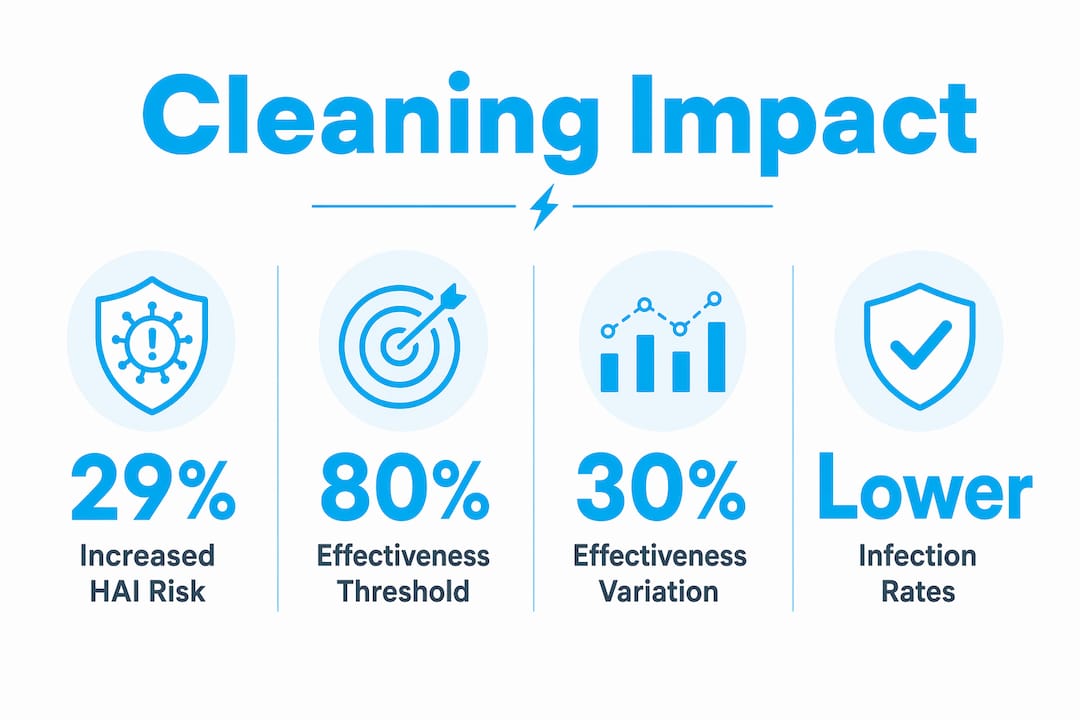
Cleaning effectiveness is directly measurable, and the data is stark. Beds cleaned below 80% effectiveness carry a 29% increased odds of HAIs. That single threshold defines the minimum standard every ICU and patient care unit must meet to protect patients from preventable infections.
The variability problem compounds the risk. Cleaning rates vary by up to 30% depending on the ICU area and the staff member responsible. That range means a patient in one bay may receive adequate protection while a patient in the next bay does not. Inconsistency is not a minor operational issue. It is a patient safety failure.
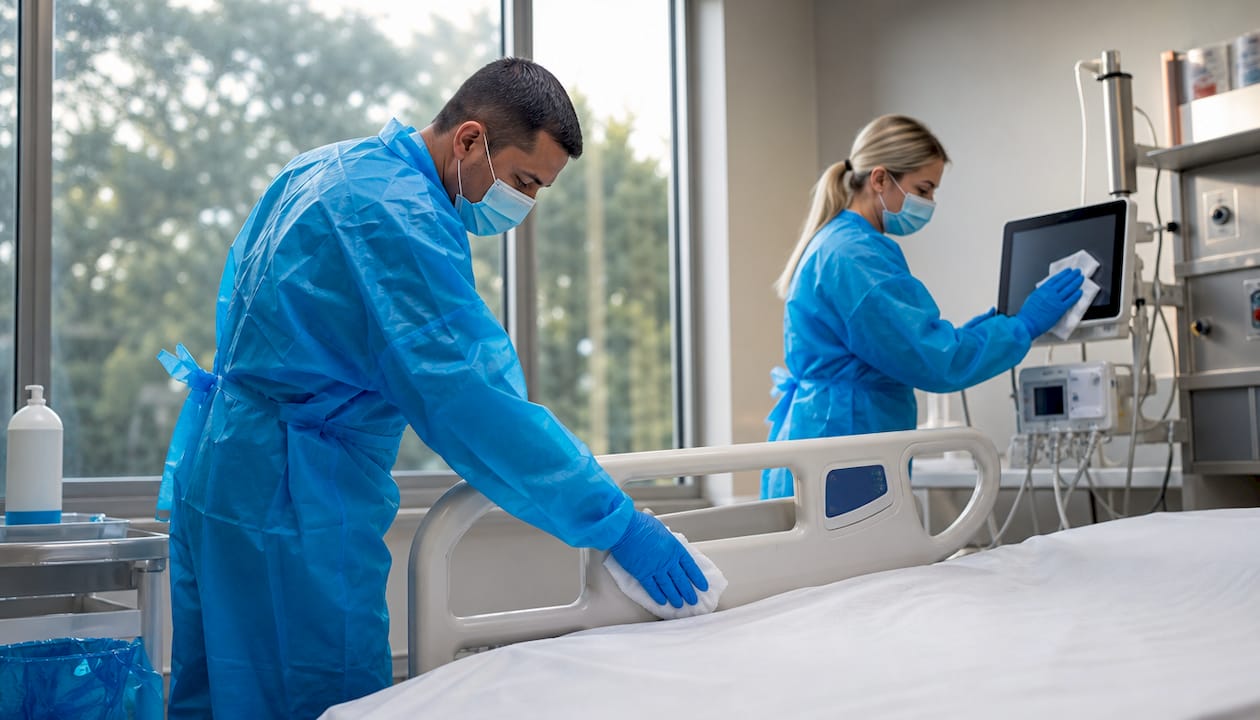
Traceability systems address this gap directly. Facilities that implemented cleaning quality traceability saw HAI rates drop from 5.4 to 3.1 per 1,000 patient-days, while compliance improved from 78.5% to 96.4%. That is a 42.6% reduction in infection rates tied directly to better cleaning documentation and accountability.
The time-of-day factor adds another layer of complexity. Cleaning effectiveness shifts by department and shift, reflecting the dynamic nature of hospital environments. A morning audit may show strong compliance while an evening check reveals significant gaps. This reality demands continuous monitoring rather than periodic spot checks.
| Metric | Observed impact |
|---|---|
| Cleaning effectiveness below 80% | 29% increased odds of HAIs |
| HAI rate before traceability | 5.4 per 1,000 patient-days |
| HAI rate after traceability | 3.1 per 1,000 patient-days |
| Compliance before traceability | 78.5% |
| Compliance after traceability | 96.4% |
Pro Tip: Establish a department-level cleaning log that records time, staff ID, and surface coverage for every cleaning cycle. This creates the accountability trail that traceability systems rely on to drive compliance improvements.
What best practices and protocols optimize cleaning for patient safety?
Standardized cleaning protocols define the difference between cleaning that looks complete and cleaning that actually reduces pathogen load. The industry-recognized approach follows a directional sequence: clean to contaminated areas, low-touch to high-touch surfaces. This sequence prevents staff from inadvertently transferring pathogens from high-risk zones to clean areas during the cleaning process itself.
Chemical agent selection matters as much as technique. The most widely used disinfectants in healthcare settings include:
- Quaternary ammonium compounds: Effective against a broad spectrum of bacteria and viruses; suitable for routine surface disinfection in low-to-moderate risk areas.
- Sodium hypochlorite (bleach): The standard choice for areas with confirmed or suspected multidrug-resistant organism (MDRO) contamination; concentration varies by risk level.
- Hydrogen peroxide: Used in both liquid and vapor form; particularly effective for terminal cleaning of isolation rooms and high-risk patient areas.
- Accelerated hydrogen peroxide formulations: Offer faster contact times with lower toxicity profiles, making them practical for high-frequency cleaning cycles.
Surface type and facility design also affect cleaning outcomes. Porous materials, complex geometries, and shared equipment create persistent reservoirs for pathogens. Surfaces, air, and water function as connected transmission pathways, meaning a surface cleaning protocol that ignores air quality or water systems leaves gaps that pathogens exploit.
Multimodal assessment tools verify that protocols are working. Visual inspection alone is subjective and unreliable. ATP bioluminescence testing measures organic residue on surfaces and provides a rapid quantitative result. Fluorescent marker audits apply a UV-visible gel to surfaces before cleaning, then check post-cleaning whether the marker was removed. Each tool addresses a different dimension of cleaning quality, and using them together produces the most complete picture of cleaning effectiveness in patient care areas.
Pro Tip: Rotate fluorescent marker placement across different surface types each audit cycle. Predictable marker placement allows staff to unconsciously focus on marked spots, which defeats the purpose of objective verification.
How can healthcare facilities monitor and improve cleaning adherence?
Monitoring cleaning adherence requires structured programs, not informal observation. The evidence on educational interventions is direct: ICU cleaning adherence improved from 15.67% to 74% following a targeted educational program. Environmental contamination by multidrug-resistant microorganisms dropped from 14% to 5.5% in the same period. Education alone, when well-designed, produces dramatic results.
A practical monitoring framework follows four steps:
- Baseline assessment: Measure current cleaning adherence using fluorescent markers and ATP testing before introducing any intervention. This establishes the gap between current performance and the target standard.
- Targeted education: Deliver training that addresses the specific gaps identified in the baseline. Generic training produces generic results. Staff need to understand why each step matters, not just what to do.
- Objective audit cycles: Use fluorescent marker audits on a scheduled and unannounced basis. Objective data removes the subjectivity that makes visual inspection unreliable and gives staff clear feedback on actual performance.
- Continuous feedback loops: Share audit results with cleaning staff and clinical teams promptly. Delayed feedback breaks the connection between behavior and outcome. Real-time or near-real-time reporting sustains the improvement trajectory.
Multidrug-resistant bacteria survive for extended periods on surfaces, and biofilm formation makes them progressively harder to remove. Frequency matters as much as technique. A single thorough cleaning followed by a long gap allows microbial load to rebuild. Facilities that schedule cleaning based on patient acuity and surface contact frequency maintain lower contamination levels than those using fixed-interval schedules alone.
Staff engagement is the factor that sustains compliance over time. Cleaning teams that understand the clinical consequences of their work maintain higher adherence than teams that receive only procedural instructions. Connecting the cleaning task to patient outcomes creates ownership that no audit system can replicate on its own.
What role does cleaning culture and safety leadership play?
Cleaning quality functions as a leading safety indicator, not just a lagging outcome measure. Housekeeping quality predicts broader workplace safety performance, with clutter-free floors, orderly equipment, and proactive hazard management signaling a facility’s overall safety culture. A unit that maintains high cleaning standards consistently is also more likely to catch other safety risks early.
“Quality housekeeping signals good safety culture, enabling early risk detection before incidents occur. When cleaning standards slip, it is rarely an isolated failure. It reflects a broader erosion of the attention and discipline that patient safety requires at every level of the organization.”
Leadership shapes cleaning culture more than any protocol document. When administrators treat cleaning staff as integral to the clinical safety team, rather than as a separate support function, the results show up in both adherence rates and patient outcomes. Visual controls, documented standards posted at point of use, and cleaning integrated into daily safety huddles all reinforce the message that environmental hygiene is a shared clinical responsibility.
Cleaning is a foundational infection prevention strategy that modulates the environmental microbiome and prevents cross-transmission of drug-resistant pathogens. Facilities that treat it as such build the kind of safety culture where cleaning excellence is self-sustaining, not dependent on periodic enforcement campaigns.
Key Takeaways
Cleaning effectiveness below 80% directly increases HAI risk, and facilities that implement traceability systems, standardized protocols, and continuous monitoring achieve measurable reductions in infection rates and patient harm.
| Point | Details |
|---|---|
| Cleaning threshold matters | Beds cleaned below 80% effectiveness carry a 29% increased odds of HAIs. |
| Traceability drives compliance | Facilities using cleaning quality traceability reduced HAI rates by 42.6% and lifted compliance to 96.4%. |
| Education produces rapid gains | Targeted training improved ICU cleaning adherence from 15.67% to 74%, cutting MDRO contamination by more than half. |
| Directional protocols prevent spread | Cleaning from low-touch to high-touch and clean to contaminated areas stops pathogen transfer during the cleaning process itself. |
| Culture sustains performance | Housekeeping quality predicts overall safety culture; leadership engagement is the factor that keeps adherence high over time. |
What I’ve learned about cleaning as a clinical safety tool
After years of working in facility cleaning across healthcare and other high-stakes environments, the pattern I keep seeing is the same. Facilities that struggle with infection control almost always have a monitoring gap, not a knowledge gap. The protocols exist. The chemical agents are available. What is missing is a reliable system for verifying that the work actually happened at the required standard.
The fluorescent marker audit is the single most underused tool in healthcare environmental hygiene. It converts a subjective conversation about whether a surface was cleaned into an objective, documented fact. Facilities that adopt it consistently see compliance climb, not because staff suddenly become more diligent, but because the audit creates accountability that changes behavior.
The other thing I would push back on is the idea that cleaning culture is soft or hard to measure. It is neither. When leadership includes cleaning performance in safety huddles, posts standards at point of use, and shares audit results with clinical teams, the numbers move. When they treat cleaning as a background function managed by a separate department, the numbers stagnate. The connection between medical facility cleaning standards and patient outcomes is not theoretical. It shows up in infection rates, patient stays, and ultimately in the safety record of the facility.
Healthcare administrators who want to move the needle on patient safety should start with their cleaning monitoring program. Fix the measurement, and the performance follows.
— William
Lightningcleaning’s approach to medical facility cleaning
Healthcare environments demand a level of cleaning precision that goes well beyond standard commercial practice. Lightningcleaning delivers medical facility cleaning services built around the protocols and monitoring standards that infection control requires. Every team member receives ongoing training aligned with healthcare cleaning best practices, covering directional cleaning sequences, chemical agent selection, and high-touch surface prioritization.
Lightningcleaning serves facilities across the Durham Region with reliable scheduling, documented cleaning cycles, and the kind of attention to detail that patient safety demands. Whether your facility needs routine environmental hygiene support or a structured audit-ready cleaning program, Lightningcleaning brings the expertise and accountability your patients deserve. Contact us to discuss a cleaning plan built around your facility’s specific safety requirements.
FAQ
What is the minimum cleaning effectiveness threshold for patient safety?
Cleaning effectiveness must reach at least 80% to avoid significantly elevated HAI risk. Beds cleaned below this threshold carry a 29% increased odds of healthcare-associated infections.
How do fluorescent marker audits improve cleaning compliance?
Fluorescent marker audits convert subjective visual inspections into objective, verifiable data. Facilities using this method consistently report higher compliance rates and measurable reductions in surface contamination.
Which disinfectants are recommended for high-risk healthcare areas?
Sodium hypochlorite and hydrogen peroxide are the standard choices for areas with confirmed or suspected MDRO contamination. Quaternary ammonium compounds suit routine disinfection in lower-risk zones.
How does cleaning culture affect patient safety outcomes?
Housekeeping quality is a leading safety indicator that predicts broader facility safety performance. Facilities with strong cleaning cultures detect and address hazards earlier, reducing both infection rates and other patient safety incidents.
How often should ICU surfaces be cleaned to control multidrug-resistant bacteria?
Cleaning frequency should match patient acuity and surface contact rates, not fixed intervals alone. Multidrug-resistant bacteria survive long on surfaces and form biofilms, so gaps between cleaning cycles allow microbial load to rebuild rapidly.


